I recently set up my new work Mac and one of my first tasks was to download Google Chrome. Yes, Google is ‘evil’ and gives away my data to the NSA, but you can’t beat the convenience of having a synchronised browser experience across multiple computers.
Signing-in to Chrome with my Google account lets automatically install my preferred extensions, synchronises bookmarks and history (if I choose) and other browsing preferences.
However, the most useful preference that I have enabled does not get sync’d. That’s “Warn Before Quitting” – an incredibly helpful feature for those with fat fingers like me, or if you’re just someone that types very fast. Tapping Command-Q on a Mac is the standard keyboard shortcut to close an app, but unfortunately it’s right next to Command-W – the command to just close a window or, say, a Chrome tab.
The Warn Before Quitting feature requires you to hold down Command-Q for more than a keystroke to quit Chrome. In fact, you have to hold it down for a few seconds while a visual prompt confirms you really do want to quit. And given how many tabs I usually have open at once, this is quite rare.
So while this is a great feature, the second-greatest feature – syncing – doesn’t actually enable it on other browsers! I suppose this is partly down to the cross-platform nature of Chrome – the equivalent key combination on Windows, Alt+F4 poses fewer issues.
Nonetheless, a pretty key preference for Chrome Mac users is not sync’d across devices. And I’ve been losing tabs for days!
Anderson claims that bus lanes “simply don’t work“, adding that “we have looked at it over six to seven months and we feel it makes no improvement to the traffic flow in the city.”
I assume he’s referring to the ‘royal’ we, as I’ve seen little to suggest there’s been a serious consultation. I can find no evidence of consultation with experts nor, in fact, the bus company Arriva who have written to all 90 councillors opposing the decision. Arriva carry 80 million passengers by bus in the region and in 2005, 82 per cent of public transport journeys were made by bus, so it’s safe to say they have some experience in the area.
There’s already been a fair bit of coverage around this controversial decision, many quoting the displeasure of a Green Councillor, Coyne who said “It goes against everything that is sensible about transport thinking“.
Unfortunately, no journalist goes into this in more detail. I did some searching and, while I’m not familiar with the specific problems in Liverpool during peak hours, but I did find some pretty basic theories of road transport applicable to this situation that support Coyne’s statement.
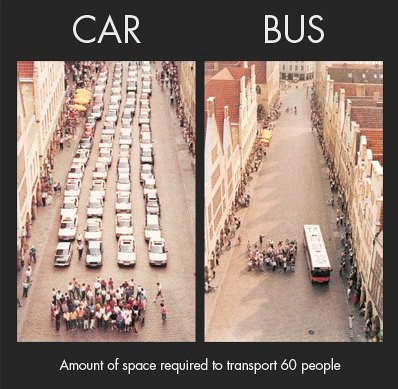
Bus lanes exist to allow buses priority because a single bus transports more people than cars for the same amount of road space. A double-decker can hold 64-90 people, whilst a single-decker can hold 48-80. Go browse Arriva’s fleet.
Scrapping bus lanes might allow slightly more car traffic to flow, but it is inevitable that buses be slowed and the timetable disrupted. Remember, the timetable and frequency will all have been planned with the knowledge that bus lanes are in operation.
Furthemore, studies have shown that the more road space you supply, the more traffic uses it. This is called induced demand and was recognised by J.J. Leeming, a British road traffic engineer who described it in his 1969 book. More modern studies have also confirmed this, going so far as to suggest a “fundamental law of road congestion“:
“[That] the number vehicle-kilometers traveled (VKT) increases in direct proportion to the available lane-kilometers of roadways. The additional VKT traveled come from increased driving by current residents and businesses, and migration.”
So potentially, all Mayor Joe Quimby Anderson has achieved is:
scrapped bus lanes to slow down bus user’s journeys
increased the amount of road space for even more traffic to congest Liverpool city centre
Below is a letter I emailed to my local councillor, Mick Loughman, on 26 June 2013 (two weeks ago). As yet I’ve had no response.
I believe politics should be open, so I wrote this letter privately and hoped to receive a response before I published the correspondence and discussed it further
Dear Cllr Loughman,
I’m writing to raise my concerns with the dangerous state of Great Ancoats Street. Specifically the section including the junction with Newton St/Blossom St, all the way to and including the junction with Store Street. Continue reading →
In a company like ours, where we’re dealing with customers 24/7 and managing the day-to-day activities of the business, finding time to think about the future can be a challenge. There’s always something you could be doing – a ticket that needs responding to, a report to write – but taking a step back and flexing our imaginations from time-to-time is just as important.
In the tech industry, there are literally no limits to what we could achieve, yet as technologists, we can sometimes experience a failure of imagination because everything is a problem that needs to be ‘solved’. Continue reading →
Memories are precious. You can’t replace them. “Memories are what warm you up from the inside”, wrote Haruki Murakami.
And throughout the 60 years of her reign, the Queen will undoubtedly have inspired countless memories in her capacity as Head of State and Head of the Commonwealth.
I think that’s why I’ve been so personally excited by the Jubilee Time Capsule project, that we are an important part of. It’s more than just a bunch of servers humming away in a datacentre: it’s a unique collection of memories. Over 80,000 of them, in fact, submitted by people from across the world, creating a crowdsourced archive of the Queen’s 60 years on the throne. Photos, videos, text: all part of a digital timeline unlike any other in history. And we’re proud and honoured to be chosen to host this unique time capsule for the 21st century.
In September, the Jubilee Time Capsule was closed for entries and “sealed”. So today, my colleague Steven and I have headed to that London for a very special event. Following the sealing of the capsule, the best 60 entries have been collated by an impressive panel of judges. This Diamond (re)Collection will then be presented to Her Majesty the Queen on a Samsung tablet.
It’s hard to believe that something we’ve been working on over the last year will now be presented to the Queen. It’s a huge honour, of course, but for us it also represents something that’s one of our core values: trust. Trust is something that’s earned, and we’re humbled really, that, as a team of young-ish, northern(-ish) geeks we’ve been trusted with delivering the hosting for a project on behalf of one the oldest institutions in the world.
Thanks must go to the guys at Capsool.com who developed the technology and to our friends at Attido Mobile who designed the iPhone and iPad apps to help people upload memories to the capsule. And, of course, a huge thanks to our support team at Melbourne, who helped design and provision the servers that host the Jubilee Time Capsule. While it was treated with the same love and care as all our customers get, it’s great to demonstrate that the platform has experienced 100% uptime – which is exactly what we aim to offer to all customers.
So as I write, we’re about to set off to the Commonwealth Club now. We’ll be uploading our own snaps and videos from the day on Twitter so keep an eye out over @MelbourneHost.
For the uninitiated, 4G (or LTE as it’s sometimes called) is the latest generation of mobile phone technology, allowing significantly faster mobile Internet connectivity. In fact, Rory’s tests this morning showed 19 Mbps and 15 MBps up, which is even better than the UK average broadband speed of 9 Mbps!
Given that more and more of our personal data is being hosted and processed in the cloud, and our increasing reliance on mobile data apps, the advent of 4G cannot come quickly enough. Fast, reliable mobile data will only increase the use of cloud technologies to store and share content. More and more of us will live our lives in the cloud.
However, as with any brand new technology, there is a cost. Users have to invest in a whole new infrastructure, with only a limited number of handsets currently supporting 4G in the UK and the small, current data tariffs don’t reflect the potential of storing your life in the cloud.
Nonetheless, this is just the start. Like 3G, ten years ago, the technology will mature and consumer choice will expand. For cloud providers like us, it’s an exciting time to step-up to the plate and continue to deliver reliable, secure infrastructure for future 4G-based uses.
But in fact, I’ve learned that Macclesfield is a burgeoning digital and creative hub.
Set amongst the leafy lanes of Cheshire, the town of Macclesfield has attracted some high-profile names such as Matmi and become an attractive choice for growing businesses like Abstraktion. It’s less than half an hour from Manchester and on the fast line to London too.
So last Wednesday, the cosy surrounds of Inca Cafe Bar played host to some of the leading digital and creative businesses in the area. My occasional cycling buddy Martin invited me and Chris Marsh down to his event Digital Edge, to meet some of the leading digital businesses and give our perspective on the future of the cloud.
Digital Edge is a fun event. About 30 of us packed out the venue, where Claire the owner was serving up local beer, cider, tasty toasties and stew. Good honest grub. And that, for me, really set the tone. Martin had asked us to serve on a ‘panel’, but essentially it was a two-way conversation throughout; an inquisitive, intelligent audience really testing our knowledge about cloud computing and debating our opinions about the future.
We were pretty conscious of turning up to an event like this and not knowing anyone, but there were friendly faces and, of course, Martin kept everything running smoothly – including plying me with some 6% cider from Somerset. And with a crowd that size, it’s actually a chance to talk to everyone that turns up, rather than whipping round quickly collecting business cards.
So is Macclesfield the new Silicon Roundabout? Well apart from the sheer fatuousness of that statement, there is something going on in the cobbled streets of this market town that’s making an impact around the world. We’ll be going back whenever we can to learn more.
Sainsbury’s is resurrecting a new concept and trialling a scan and go solution for shoppers. The Next Web reports
Sainsbury’s supermarket is trialing a new service called Mobile Scan & Go that allows users to shop with their iPhone or Android phone and pay at the till without unloading their trolley or bags.
I’m sure it was over 10 years ago that supermarkets started rolling out a “self scan and pack” solution for in-store shopping. In a time before the smartphone however, shoppers used handheld barcode scanners that were held in banks at the entrance to the store. Once placed back into a dock, shoppers received a special receipt that allowed checkout operatives to take payment as normal.
Ultimately, the self-scan system didn’t last long – I’m guessing they were just trials and shopper resistance to technology probably scuppered it.
Self-scanning also launched on the cusp of reliable Internet grocery shopping – Webvan had gone bust, Ocado had just launched – so maybe shoppers that wanted to avoid checkouts simply went online rather than go through the theatre of picking out bananas at their preferred ripeness.
But in recent months, that concept has made a comeback. Last year, Apple launched EasyPay, which allows you to scan your own items at participating Apple stores, pay with your iTunes card details and leave the store.
Unlike Apple, which uses geolocation and in-store wifi to work out which store you’re in, the Sainsbury’s system requires you to scan a QR code to “check in” to the store then take your phone to the till where payment is taken after scanning a code to “check out”. No details yet on whether you’ll be ‘randomly selected’ to have all your shopping re-scanned, as used to happen with the old system. But this would be obvious.
Though on researching this article, I was surprised to read that Waitrose still offers this under the brand “Quick Check”. And even Tesco are rolling this out again as an improvement.
To be honest, I’m not convinced that supermarkets will switch to an entirely self-scan solution. The growing acceptance of self-checkouts is a driver in that direction, though their perceived unreliability and complexity continues to drive a demand for checkout operatives.
Nonetheless, maybe there are areas where scan-and-go will take off. For example, supermarket kiosks where relatively low value items can be purchased off the shelf. Retailers like WH Smith used to operate ‘honesty’ payment for newspapers some years ago, so given the enhanced security now in operation, perhaps scan-and-go could work in a supermarket environment.
The rise of contactless cards, however, puts a bit of a dampener on the argument that low value transactions will be sped up through scan-and-go. If only there was some way of linking these two concepts…
In 1919, a young man named Conrad bought a 40-room hotel in Cisco, Texas. It was a backup plan; he’d originally wanted to buy the town’s bank. The hotel did surprisingly well and, in 1925, he opened his first high-rise hotel: the Dallas Hilton, and the first hotel to bear his name.
Fast forward almost 90 years, and I’m in the Manchester Hilton: a tall, gleaming edifice that stands testament to Conrad Hilton‘s entrepreneurial spirit despite war and economic depression. It’s a building that often scrapes Manchester’s perma-cloud so perhaps for those reasons, it was an ideal place to take part in a seminar about what ‘the cloud’ can do for entrepreneurs and owner-managed businesses.
For the more cynical amongst us, it may seem surprising that in 2012, we’re still discussing what ‘the cloud’ is. Unfortunately, this is a side-effect of the term ‘cloud’ becoming the biggest buzzword since “social media”!
No more. To be honest, we got involved in this seminar because there’s so much misinformation or inaccurate content that exists about ‘cloud computing’ and saw it as a chance to set the record straight. But, perhaps more importantly, it was also a chance to sit down with some of the region’s leading entrepreneurs and answer their questions about the nature of the cloud and how it could help them grow their businesses.
And it’s not surprising that most people are confused. The cloud has been touted as the answer to everything from managing your accounts to avoiding your mother-in-law! But, as with everything, the real answer is to talk about what you’re trying to achieve and then examine whether cloud technologies can play a part.
But time-starved business owners still want a simple answer. The best I can offer is that, with a reputable cloud provider, using a cloud-based option can offer increased reliability and flexibility over traditional hosting and software delivery methods. It’s also easier to scale up resources allocated to cloud hosting and, importantly, scale down – meaning businesses that are growing rapidly can rapidly expand their technology infrastructure and also respond to seasonal demand.
It’s tempting to start with a technology – be it cloud, or physical – and design a solution around that. The thing is, a cloud solution that’s poorly put-together can end up costing more. That’s why we’d always recommend having an in-depth face-to-face conversation with whomever is hoping to provide your solution and insist it’s benchmarked against other options, as well as considering the potential for growth. This is why we’ve also put together a document: the five dangers of cloud servers. We hope helps you ask your potential providers the right questions when it comes to considering a hosting or service platform based on the cloud.
Finally, here’s a copy of the presentation that Steven delivered at the seminar yesterday morning. To be honest, it’s best done in person… but you can enjoy the hand-drawn slides anyway! You can also read a roundup of the tweets from the event below.
I selected this model on the basis of the fact it’s very small, has no flashing lights and carries a relatively huge capacity.
I wanted to use this in my HP Microserver as a USB boot drive, so that I could have maximum hard drive storage capacity. It worked as expected at the start, being successfully formatted under Ubuntu Linux and acting as a boot drive (no swap file). I was concerned about wear, but as a boot drive, it generally wouldn’t be accessed apart from at boot or to launch media management software (Plex) which generally runs a service. I also took steps to minimise wear by installing Linux without swap and creating my media library and transcoding scratch drive on a real hard drive in my RAID array.
It worked well for a while – but an order of magnitude slower than a hard drive. However, one day my server stopped providing service and, on reboot, wouldn’t respond to ping.
Unfortunately, the worst had happened: somehow the USB boot drive had been corrupted, taking details of my RAID array with it as well as my settings for Plex media manager.
I couldn’t even access data when I plugged the USB drive into another computer – it shows up as a “USB Composite Device” under Mac OS X provided by Integrated Technology Express, Inc. but I don’t even get a prompt to initialise the drive. This suggests to me a microcontroller failure.
Ultimately, this only caused inconvenience as I rebuilt the server with Ubuntu and a new content setup (had been replicated) – but I would strongly reconsider using a USB flash drive as a boot drive of any sort and especially this particular model. Unfortunately, I’m beyond the return date now but if I could, I’d be getting this swapped. It’s fine as general data storage but definitely not something that needs reliability or integrity.
I suppose you pays your money and you takes your choice – but think carefully about where you’re using it.

 . More modern studies have also confirmed this, going so far as to suggest a “